

Tough talks: Helping young children feel safe when the news is scary

Talking to kids about difficult subjects can be an intimidating proposition. It’s also essential to building trust and helping them learn to navigate the world. In the first installment of our “Tough talks” series, we look into how parents and caregivers can help little ones process alarming news events.
Journalist and media scholar George Gerbner once said, "The most violent show on television is the nightly news." School shootings have become a regular occurrence in the United States, to say nothing of escalating political violence at home and abroad, natural disasters, and a global pandemic that had a profound effect on all of us, including – perhaps especially – on children.
How can caretakers help young children make sense of a world that can feel pretty scary? Melissa Barnett, director of the Frances McClelland Institute for Children, Youth and Families at the Norton School of Human Ecology, offers some insights on what to do when young children encounter frightening news.
Should I talk to my kids about scary news stories in the first place? Is it better to keep them away from the news entirely?
Barnett said that while it may be tempting to just ignore alarming news in front of children, that approach is likely to backfire.
“It’s important to remember that you often can’t monitor what your children are exposed to 24/7,” she said. “Even young children may be hearing about these events at preschool or elementary school, so you want to signal that you’re a safe place to talk about them. They may have some fears or misconceptions that you don’t have an opportunity to address if you try to ignore it.”
But that doesn’t mean that children should be exposed to graphic content without any interference from their parents or caregivers.
"Ideally, we aim for balance,” Barnett explained. “We want to foster trust and conversation, but we don’t want to create nightmares.”
Barnett said this could look like pre-screening news stories to determine what’s appropriate for the child, taking into account their age and level of sensitivity. Then caregivers can watch or listen to those clips with the child and use them as a jumping-off point for conversation.
How can I tell if my child has already been exposed to something that’s upset them? How can I help them process their feelings if they have?
It’s important for caregivers to pay attention to their children and to notice when there are changes in their behavior.
“You may need to do some detective work,” Barnett said. “Sometimes behavior changes are just a normal part of their development, but sometimes they can indicate that something bigger is going on.”
Barnett said sudden behavior changes may warrant further investigation. These can include sudden resistance to going to school, sleep disturbances, or unwillingness to be left alone. Aggressive behavior can also be an indicator of anxiety or fear in children.
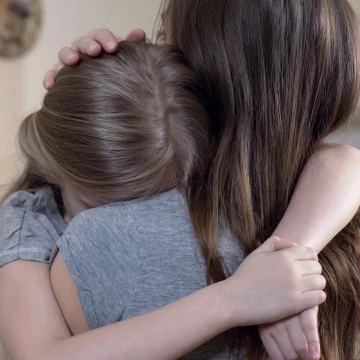
If a child is struggling with fear or anxiety, Barnett recommends taking a “team” approach to helping them process their feelings.
“If your child is struggling with anxiety or fear around going to school, I’d reach out to their teachers,” she said. “They may see changes in behavior in the classroom, and it signals that you’re open to having those conversations. If you have significant concerns, talk to your child’s pediatrician. They can provide referrals if you think your child needs to speak to a counselor or other mental health professional.”
Barnett said it’s important to reassure kids but not minimize their feelings.
“You don’t want to dismiss their fears,” she said. “They need to be acknowledged. And then, as much as you feel is honest, you can reinforce to them what you and other trusted adults are doing to keep them safe.”
What if the caregiver is the one dealing with fear or anxiety around current events?
This is another instance where caregivers should aim for balance.
“Kids can be very sensitive to the emotions of their caregivers, and this can be both a good and a bad thing,” Barnett said. “It’s okay to share with them if you’re feeling scared or sad, and why you feel that way. One of the most effective strategies to help kids develop empathy is by modeling it and teaching it.”
Barnett said the trick is to share your feelings with your child without overwhelming them.
“You want to make sure you’ve had a chance to process on your own as much as possible before you talk to your child,” she said.
Are there resources that can help parents start these conversations?
There are. Barnett said the first place parents and caregivers may want to look is the pediatrician’s office.
“Having a conversation with a pediatrician about how to have these conversations can be very helpful,” she said. “This can be especially helpful if your child is worried about getting sick or hurt, but they can help you start conversations about other fears as well. They also may be able to point you toward community resources.”
She also pointed to the American Academy of Pediatrics, whose website offers age-based guides about talking to kids about tragedies, natural disasters, fears and phobias. No matter how scary the world can be, it’s important to be a safe place for your kids, Barnett said.
“One of the reasons it’s important to have these conversations is to give your child tools to help them process and manage their fears,” she said. “That can look like mindfulness to help them feel grounded or having a plan in place in case of an emergency. Or it can be like Mr. Rogers said: ‘Look for the helpers. You will always find people who are helping.’”